Showing posts with label weaving. Show all posts

Tuesday, October 8, 2013

From the Collection: Straw Into Gold

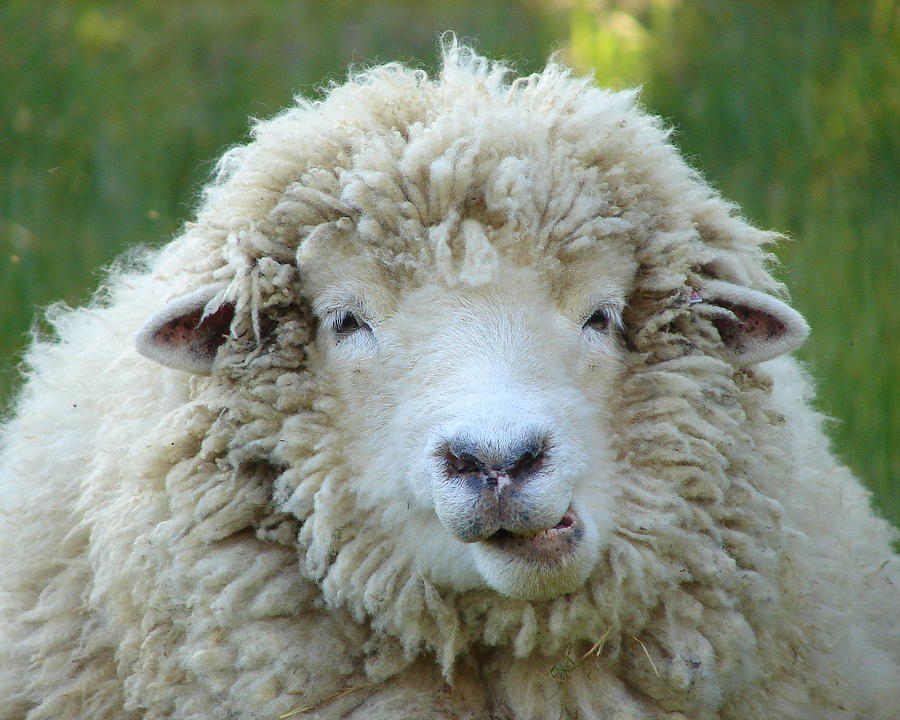
Whenever I look at weaving or knitting, or ikat or batik or crochet or quilting, I think "straw into gold." Which is really what any type of textile craft/design/skill/creation is...

Artists take this


or this 


or even this 
then turn it into fiber...then into art!

This is a skirt (falda) from Guatemala.  It's cotton & woven of fibers not much thicker than the thread used for sewing.  And it's incredibly long (33" x 152"), meaning that it must have taken ages to make.  The narrow ends are sewn together to make a loop and the women step into them, then wrap them around and tie them with a belt (cinturon). 

This is a Baluchi woolen rug, from northern Oman.  Though the wool is quite coarse, I love that the design is so intricate, again a lot of work (and paying attention).  The dyes are all traditional, too, which is hard to find. 

Here's another example of amazing work, but with modern dyes, a woolen rug from southern Egypt.  

And one example of Navajo weaving...a saddle blanket. Probably from the 1930s (again, natural dyes give a hint of age, but also that it's worn).  But I'm no expert!

And another Navajo weaving, a chief's blanket, also from the 1930s.  The dyes are in better shape on this one...perhaps because it was used less (it would have been worn around the shoulders, not sat on)?  

Finally, a recent arrival to the collection...a friend just gave me this, she got it in Thailand. It is very finely woven with cotton and silk yarn not much thicker than sewing machine thread!  I cannot begin to imagine how much time this took! 

To give you an idea of the work involved, here's a picture showing the back & front.  Sorry the photos aren't the best; there seemed to be a glare off the fabric, which is one of the reasons I'm pretty sure silk is one of the materials.  

I just realized I have a class tomorrow evening at Bits of Thread, so have to go prep for that!  Thanks for reading!  

Sunday, September 30, 2012

From the Collection: Weaving - Bolivia & Ghana

I'm working on a few projects I hope to share soon, but in the meantime, thought you'd enjoy seeing more from our textile collection...

This first one is a saddle blanket from Bolivia.  It's extremely fine wool (in terms of gauge), but isn't that soft--it seems as though it'd be fairly durable.  Probably goat?  Definitely not one of the higher quality wools from the region like guanaco or llama or alpaca.  It has some amazing detail (see below). 


I also believe it was repaired at some point, not surprising for a blanket used on a pack animal.  However, the repair work is also pretty amazing--though it doesn't reconstruct the original pattern, it is as tightly woven, and looks quite sturdy.    


I really love the idea that this blanket had a utilitarian purpose, but was designed and crafted beautifully, even if it was going on the back of a pack animal!  So it protected the animal, and possibly made the owner happy every time s/he looked at it.  It certainly makes me happy when I look at it.

Another item decorating the living room right now is this kente cloth, from Ghana.  It's woven from silk & rayon (I think).  I feel like it's silk because of the luster, but that it must have rayon in it because it's fairly sturdy (we have another 100% silk kente that is fairly worn--silk is amazing, but fragile).  

If you've read my comments on weaving before you'll know right away that this is strip-weaving at its finest.  The strips are about 3" wide and are stitched together to make an eye-catching design.  Weaving on such a narrow loom means the loom is extremely portable and can be moved mid-project, then hung from a tree or fence post and used immediately.

Here are a few detail photos of this kente.  


Questions?  Comments?  Please leave them below.

Music:  The XX, "Angels," definitely Sunday morning music!  


Friday, May 4, 2012

Guatemala's Greatest Hits; well, a start anyway...

Textile Heavens!  Guatemala definitely makes the top 5.  Here's why... 

I think I mentioned that we stuck a bed/bath/closet onto our house after we bought it.  We've been slowly decorating it, and a few weekends ago the Roommate put up a curtain rod (about the only way we've come up w/ that gently displays our textile collection) above our bed.  And the first thing on it is two of our many treasures from Guatemala.

It's a huipile (tunic) from Aguas Calientes.  The weaving & embroidery styles for each area of the country are quite distinctive, and it's generally easy to tell where women are from by the lovely tops & skirts they are wearing.  The Anthropology Museum in Columbia, Missouri has a nice online exhibit, if you'd like to see more.  And here's a photo of a woman from Aguas Calientes, wearing her lovely huipile, and weaving another.


The detail is amazing, as you can see from this second photo.  It has many of the typical elements of huipile design (zig zags, bluebirds, flowers, other trimmings), but of course rearranged in a pattern pleasing to the weaver (who most likely is also the wearer).


We've had weavers look at it & they say they cannot tell if it was woven or embroidered, the work is so fine.


We also got a 6-foot long headdress from Nebaj out of storage.  Nebaj is way in the north of Guatemala.  Here's a photo of a woman from that area wearing such a sash braided into her hair.  I couldn't afford one of the really long ones (12'), we were living on about $30/day between the 2 of us, and had to be careful what we bought.  However, you will be glad to know we budgeted (and spent) about 15% on textiles on our 14 week trip through Central America.  Cheap buses & hotel rooms quickly fade from memory, but the richness of the traditional textiles we've bought will be with us always!  (Our mantra?  Should have bought more!)


Here are a few other woven bands we got there, also worn braided into the hair by the women of the various regions.
Thank you for looking at more of our treasures!  You can always ask questions in the comments section, and I will try to answer, if I am able.

Sunday, April 15, 2012

The Tawaraya Workshop - Textile Museum Exhibition

The Roommate & I went into town in the early afternoon as we wanted to see the Woven Treasures of the Tawaraya Workshop exhibition at the Textile Museum.  The silk fabric was amazing, no surprise there, and they even had some of the ceremonial kimono used by the Imperial Household.  For example, the bridal kimono of the Empress Kojun (Mrs. Hirohito to you & me)!  The Gallery Guide is here.  


But then we went up to see a short film about the director, Kitagawa Hyoji, a National Living Treasure in Japan, head of the Tawaraya Weaving Workshop.  He doesn't just make amazing woven fabrics for court ceremonies now, he recreates 1000+ year old textiles found in Japan's museums & shrines.  This includes not just matching color & weight of the silk, but also reproducing the weaving style.  He spends a lot of time setting up looms & looking through a magnifying glass!  


When 皇太子妃雅子 (Masako-san) was married in Japan, in 1993, of course the kimono were woven at Tawaraya.   A fun exhibit & highly recommended.  
    

Friday, November 4, 2011

Weavings at work?!

As I mentioned before, we didn't take enough photos of weavers working when we were in South America & Central America.  However, here's a nice one of a woman in Guatemala using a backstrap loom.  And check out her huipile, the top she has on.  She's probably weaving another; I'm sure I asked, but do not remember.  

Anyway, because I didn't take enough pictures for the "Weavers at Work" series, I'll post a few that I call "Weavings at Work," people wearing amazing woven clothes while going about their business...

Don't worry, we do have others of Weavers at Work, but you'll have to wait until we get to the Oman, Asia & Africa photos...

The second photo is a huipile shop in Antigua, Guatemala.  We saw an awful lot of beautiful, high-quality huipiles for sale in the big market towns (Antigua, Chichicastenango, etc.), and it rather boggled my mind; I mean there are only about 14 million people there; it felt like each of them was trying to sell 3-4 huipiles!

Finally, the women in the third photo are a the market in Nebaj, and are wearing typical northern Guatemala dress.  (It's pretty easy to tell where women--and sometimes men--are from, if they're wearing their traditional dress.)  Can you see the woman on the right?!  In her hair is braided this amazing ribbon, which is woven & embroidered.  We have such a "ribbon" but it's only 6' long--we saw some that were 12'.  This is the problem w/ traveling while poor--I could have easily bought 10 of them, but instead had to make a choice!  We did buy 7 huipiles, though!

Wednesday, October 26, 2011

At Work - weavers & spinners the world over

We started travelling a l o n g time ago, and though we were interested in textiles, we didn't go out of our way to find weavers & spinners and take their picture.  (Bummer--I guess we'll have to go back?!)

I did want to show you a few photos that we did take...not scanned in from postcards, which we also have many of.  Anyway, this first one is a family we met in Otavalo, Ecuador in the early 90s.  The Maldonados were great, so friendly (this was taken at their home, but we met them in the market).  They gave us dinner, too!  That's me on the left peeking out.  The family's main source of income was the weavings the husband, Segundo, made, and which his wife sold in the market.

Here's another photo of a woman spinning in Guatemala in 1997.  It's not a very good picture...sorry.  We tried to be polite when taking photos, and sometimes people just seemed irritated, or ignored us.  You can see the combed wool to her left, turning into yarn on the wheel to her right.  Magic!

We'll be going through our many photo albums & scanning in what we find to share w/ you.  Stay tuned...

Friday, September 30, 2011

From the Collection: Weaving Accoutrement Part III

Drop spindles!  Of course you can spin wool into yarn with a spinning wheel (got to go round/drop all your troubles by the riverside...)!!  But if you're learning to use a drop spindle, what you drop, along with your troubles is the spindle.  And you drop it a lot.  I never learned to use one, but the Roommate knows how; he is however, a bit out of practice.  But he told me at his first class, there was little talking, but lots of clunking (spindles hitting the floor).

Once again, we're back to why decorate something that is for utilitarian purposes? (I know why, but I get a kick out of it, so you'll probably hear about it again.)  Sorry the photo isn't any better; you'll have to take my word for it.  The spindles above are from: Ladakh, Laos, Oman and Thailand.  The largest one, and the one on the bottom, come apart completely, I'm not sure why--for transport?  They are all heavily used, very worn.  They're simple, beautiful, and do the job (once you know how).

Here are two Tibetans using drop spindles somewhere on the road to Kailash.

There are plenty of videos on youtube showing how to, and videos of spinners from all over the world.  I don't want to discount anyone's spinning skills because I can't do it at all, but I was especially impressed with the women in Peru & Bolivia...they do it standing up & sometimes while walking (and we didn't see many sidewalks or paved roads when we were there).  I can't even being to think how that works; I can text & walk, but I have to think hard and I only do it on routes that I take every day.

If you've ever seen anyone spinning (with a wheel or a drop spindle), it's mesmerizing.  I find it so relaxing.  The old fairy tale about straw into gold?  It's about magic--and when you see wool being spun into yarn, you'll realize you're seeing magic, too.  And a skill that's probably at least 20,000 years old.  More on that later.  Thanks for reading and let me know what you think.  Questions? Comments?

BTW, the Met has an exhibit on Andean Huipiles (Tunics)! Unbelievable weaving & dying techniques on these masterpieces--some of them over 2000 years old.


Sunday, September 25, 2011

From the Collection: Weaving Accoutrement Part II

Shuttles!  What's a shuttle?!  A shuttle carries the thread being woven back & forth (much like the shuttle that carries me back & forth between work & the Metro station).  In this video from Laos, you can see the weaver swapping between different shuttles to change the color & create a pattern.  BTW, this was filmed near Luang Prabang, Laos, which is where we bought the fabric I showed on the previous post.  You'll notice that the reeds on the looms are much like the ones we have, too.  And look at these looms--they are just wood & string, but they make magic!

So back to shuttles--aren't they gorgeous?!  I love the different styles & shapes & the well-seasoned wood.  The two darkest shuttles are from Laos (again, they're featured in the video).  The two on the left are from the Czech Republic.

Remember in the previous post I wrote that a loom is just a contraption made of sticks and string?!  But the sophistication of this arrangement & the sophistication of the fabric that comes out of these looms never ceases to amaze me.  Here's a fine example of a shawl from Indonesia.  I suspect that's the monkey king featured in the design.

I do go on, don't I?!  Some more Ghanaian textiles to the right...we took this at a shop in Accra.  The wall is full of mostly Kente cloth, but also some Ewe cloth & plain woven items.  The Ewe and Kente tend to be strip-woven, but now they have wider looms in Ghana, too, so that explains the less intricate patterns.  I think we came home with seven Kente and 3 Ewe, plus quite a bit of other stuff, too, like masks and miniature coffins (see here for an explanation of why we needed a coffin model).  However, our motto is We should have bought more!  

Thursday, September 22, 2011

From the Collection: Weaving Accoutrement, Part I

In addition to collecting textiles, we collect items used to make textiles (especially if they're wooden!).  I'll start off with items needed for weaving...drop spindles, shuttles & today, a back-strap loom and some loom pieces from Asia & Africa.

One reason we are drawn to such items is that besides being utilitarian, they are often beautifully decorated, too. They don't need to be carved in different shapes or have any decoration, but they do.  A great example is this loom (left) from Bobo Dioulasso, which has the hanging portion carved in the shape of a bird; I suspect this is from the Senoufo/Senufo people.  As a birder, I found a hornbill loom impossible to resist.

Bondouko
We're always amazed at how just a few bits of wood and string, if properly constructed can become a complicated loom.  We've seen them all over being used to make beautiful and intricate fabric.

In Africa the looms we saw weren't portable.  However, in Laos and Latin America you often see weavers using backstrap looms--all you need is a tree or fencepost and your loom is ready.

Here's a video of a man weaving in Cote d'Ivoire, on a loom much like this one. These looms are quite narrow (the resulting fabric is often about 6-7" wide, but some are even narrower).

Woven strip - Ghana
So what do you do with a very long piece of fabric that's only 6" wide? In West Africa, after strip-weaving, they sew all the narrow strips together, to great effect.  I believe this first example, blue & green (above), is some Bondouko cloth.  We bought this and another piece in Abidjan.  It has an interesting strip woven effect, but is also embroidered--unusual on a strip woven piece.  Embroidery is common, but on another type of fabric:  that made with Adinkra, or stamps carved from gourds. In the video, the man is making plain white fabric--this is useful, too, especially for printing on with mud to make Bogolon or mudcloth (you'll have to wait to see our examples of that).  

Left, above:  A strip we bought, basically just to show where Kente comes from.  These strips, however, are sold all over Ghana as souvenirs.  I can't imagine buying a strip, but not an actual piece of Kente; but that's just me.

Below are some examples of Kente & Ewe, from Ghana, where geometric design & strip weaving come together to create true masterpieces. This first one is cotton & rayon (I think).  Nowadays these items are worn for special occasions (we saw a few men in the villages wearing them, not often; perhaps they were officials, or on their way to a ceremony).  To give you an idea of how this cloth is worn, here is an amazing photo of three Fante women, two wearing Kente, the standing woman wearing an Adinkra print, taken in the late 1890s.   Strip weaving is a long process and requires a good eye and lots of work--these women were wearing their finest clothing, I suspect.

This blue & white fabric (left) is Ewe, also from Ghana.  The Ashante, who make Kente tend to use a wide variety of bright colors, while the Ewe tend to stick to indigo & white, with a healthy dose of primary colors to keep things interesting!  I am pretty sure we only saw Ewe made of cotton.


Finally, to the right is a silk Kente, which we bought in Tamale, in the north of Ghana.  Tamale is where you have to go if you want to get to Mole National Park; highly recommended.  It's also where I broke down in tears when I found a market selling used English-language paperbacks!  A story for another time--which would have been averted if Kindles or iPads were available then...

Remember I was talking about a simple-looking bit of wood & string put together to make a loom?  What comes off these looms is amazing.  Here's a piece we bought in northern Laos, at a "weaving village" mentioned in Lonely Planet.  We walked a few miles from where we were staying and found about 10-12 women using a variety of looms to create many different items.  We went for the largest piece they had, which you can see to the left.   (I have photos of that village, somewhere, but they'll have to be scanned in after I find them; this trip was in 2000.)

Back to the looms themselves:  reeds look much like a comb and are used to pack the weaving tightly.  (In the hornbill loom, above, the reed is the brown wooden part.)  Here are two combs from Laos.  The top is just the comb, while the bottom is the backstrap loom, complete with a bit of fabric and 4 heddles.  (Heddles are what makes the pattern.)  You'll probably notice the pleasing shape of these; all of these have been used as decoration in our various abodes because they are so lovely.

Here's a blog about backstrap weaving (an extremely portable loom).

If you're wondering, the carpet under these reeds is from Aswan in southern Egypt.  It's wool and another example of strip weaving, but with strips about 12" wide.  It's yet another masterpiece we've been lucky enough to come across (and afford).  More on carpets some other time.

I'd love your comments; are you bored stiff?  Should I go back to sewing?