Showing posts with label Guatemala. Show all posts

Tuesday, May 20, 2014

It's Always a Quetzal Kind of Day...


Bella & I both like birds.  So when we're traveling (me & the Roommate, not me & Bella), I'm on the lookout for any natural history included on artwork. Especially birds!  This beautiful huipil from (probably) San Miguel Chicaj, has lots of quetzales.  All overlapping in what is quite an intricate geometric pattern.  Did she embroider by rows, swapping colors?  Or by color?  In knitting I know it would be by row, but I'm not sure about embroidery.  

Here's what I love about handmade art: Take some basic elements such as simple repetition, color change, concentric shapes, parallel lines, etc., none of which are difficult to embroider, or to imagine.  But in the right hands, WOWZA!  


Border detail; love the zig-zag & suns!

Overlapping quetzales
(Note: The photos are small on this page, but click on them to see the full-sized versions & admire the detailed handwork.)

Tuesday, May 13, 2014

It's a Quetzal Kind of Day!

Unless you're an avid birder, or into punk-rock hairstyles, you may not know what a quetzal is. Well, for one thing, quetzales are the national bird of Guatemala.  The money is also called Quetzales--I love that!  
Source
I haven't ever seen one in the wild...not for lack of trying.  The Roommate & I have spent lots of times traipsing in rainforests, following a guide, trying to see through dripping leaves & damp binoculars.  
Source
They are well & truly amazing, and are a common icon for all types of artwork, whether it's for a Mayan ruin, or a huipil, a woman's tunic.  

I've mentioned before that styles of huipiles are fairly useful to determine the wearer's hometown.  

Here another from our collection of 7 (never enough!), both with quetzales as the extremely amazing subtle, repetitive, interlocking embroidered icon.  I cannot think of enough adjectives to describe my feeling of wonder when I look at these works of art!  

(Note: The photos are small on this page, but click on them to see the full-sized versions & admire the detailed handwork.)

From Quetzaltenango (place of the quetzales), here's a masterpiece.  BTW, I'm not 100% sure of the origin of this item.  If you know better, please leave a comment for me!  If you want a glimpse into the complicated world of Guatemalan geography & huipile art, check out Huipils, for their list of towns, each with distinctive embroidery & weaving styles.  


Embroidered quetzales--perfectly kerned!  

 The mini zipper at the neck is so charming.

Each shoulder has a band of velvet.

What's fascinating to me about this particular huipil is that it looks to be made of a basic cotton rice or potato sack, then heavily embroidered with the kerned quetzales in multiple colors. THEN, a completely different design & type of embroidery was applied with finer thread.  At first I was sure that this was machine embroidery, but after some thought, I don't think it's very likely on a huipil that is a at least 25-30 years old.  
From reading about these vertical bands, they were apparently first used to disguise seams when narrow bands of fabric had to be pieced together.  Because they were so beautiful, when wider base fabric became available the decoration was retained, though it was no longer needed.  

Stay tuned.  I'll have another huipil up next week.  Comments/Questions?  Let me know.

Tuesday, February 11, 2014

From the Collection: Falda de Guatemala, and Vintage Pattern Pledge!!

I've mentioned this lovely woven skirt from Guatemala before, but it's been taken from storage and is now adorning our bedroom.  It's huge: sewn into a loop about 10' long, 36" wide.  Women step into it, then use a belt to tie it tightly.  The warp threads are really just that--about the width of sewing threads.  Which is one reason it's so detailed, but I cannot imagine how long it must have taken to finish it!  

Here's a nice photo of women in similar skirts.

And one last photo.  One of the reasons the Roommate & I collect textiles is the loving care that goes into them.  This skirt not only displays the intricate weaving process, it also has a lovely velvet border added along part--probably the front, to make it a bit dressier.  I love the idea of a woman, somewhere, deciding to make her skirt just a little bit prettier!  You go, chica!  


Vintage Sewing Pattern Pledge
Also, I'm joining the Vintage Pattern Pledge, started by A Sewing Odyssey, over at her blog. You just have to look through all your amazing vintage patterns, then choose 5 that you pledge to make in 2014.  Fun, huh?  I will be curious to see what everyone else comes up with.  And am already wondering if some of the vintage-inspired patterns, and vintage reprints count?!  

You can tweet about it here: #vintagepledge

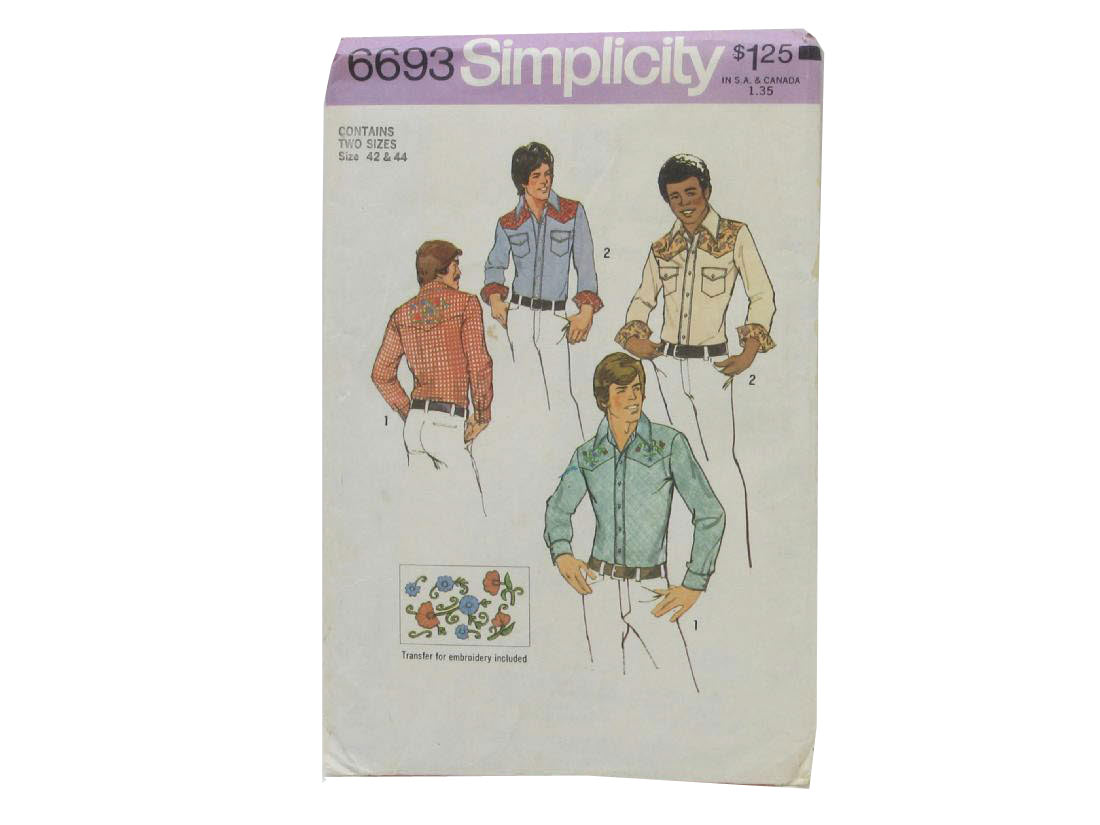
My first up vintage will definitely be Simplicity 6693 (1974), which I've already started on.  The Roomate has two so far, but I've already started on one for a friend! 


Tuesday, October 8, 2013

From the Collection: Straw Into Gold

Whenever I look at weaving or knitting, or ikat or batik or crochet or quilting, I think "straw into gold." Which is really what any type of textile craft/design/skill/creation is...

Artists take this


or this 


or even this 
then turn it into fiber...then into art!

This is a skirt (falda) from Guatemala.  It's cotton & woven of fibers not much thicker than the thread used for sewing.  And it's incredibly long (33" x 152"), meaning that it must have taken ages to make.  The narrow ends are sewn together to make a loop and the women step into them, then wrap them around and tie them with a belt (cinturon). 

This is a Baluchi woolen rug, from northern Oman.  Though the wool is quite coarse, I love that the design is so intricate, again a lot of work (and paying attention).  The dyes are all traditional, too, which is hard to find. 

Here's another example of amazing work, but with modern dyes, a woolen rug from southern Egypt.  

And one example of Navajo weaving...a saddle blanket. Probably from the 1930s (again, natural dyes give a hint of age, but also that it's worn).  But I'm no expert!

And another Navajo weaving, a chief's blanket, also from the 1930s.  The dyes are in better shape on this one...perhaps because it was used less (it would have been worn around the shoulders, not sat on)?  

Finally, a recent arrival to the collection...a friend just gave me this, she got it in Thailand. It is very finely woven with cotton and silk yarn not much thicker than sewing machine thread!  I cannot begin to imagine how much time this took! 

To give you an idea of the work involved, here's a picture showing the back & front.  Sorry the photos aren't the best; there seemed to be a glare off the fabric, which is one of the reasons I'm pretty sure silk is one of the materials.  

I just realized I have a class tomorrow evening at Bits of Thread, so have to go prep for that!  Thanks for reading!  

Friday, May 4, 2012

Guatemala's Greatest Hits; well, a start anyway...

Textile Heavens!  Guatemala definitely makes the top 5.  Here's why... 

I think I mentioned that we stuck a bed/bath/closet onto our house after we bought it.  We've been slowly decorating it, and a few weekends ago the Roommate put up a curtain rod (about the only way we've come up w/ that gently displays our textile collection) above our bed.  And the first thing on it is two of our many treasures from Guatemala.

It's a huipile (tunic) from Aguas Calientes.  The weaving & embroidery styles for each area of the country are quite distinctive, and it's generally easy to tell where women are from by the lovely tops & skirts they are wearing.  The Anthropology Museum in Columbia, Missouri has a nice online exhibit, if you'd like to see more.  And here's a photo of a woman from Aguas Calientes, wearing her lovely huipile, and weaving another.


The detail is amazing, as you can see from this second photo.  It has many of the typical elements of huipile design (zig zags, bluebirds, flowers, other trimmings), but of course rearranged in a pattern pleasing to the weaver (who most likely is also the wearer).


We've had weavers look at it & they say they cannot tell if it was woven or embroidered, the work is so fine.


We also got a 6-foot long headdress from Nebaj out of storage.  Nebaj is way in the north of Guatemala.  Here's a photo of a woman from that area wearing such a sash braided into her hair.  I couldn't afford one of the really long ones (12'), we were living on about $30/day between the 2 of us, and had to be careful what we bought.  However, you will be glad to know we budgeted (and spent) about 15% on textiles on our 14 week trip through Central America.  Cheap buses & hotel rooms quickly fade from memory, but the richness of the traditional textiles we've bought will be with us always!  (Our mantra?  Should have bought more!)


Here are a few other woven bands we got there, also worn braided into the hair by the women of the various regions.
Thank you for looking at more of our treasures!  You can always ask questions in the comments section, and I will try to answer, if I am able.

Friday, November 4, 2011

Weavings at work?!

As I mentioned before, we didn't take enough photos of weavers working when we were in South America & Central America.  However, here's a nice one of a woman in Guatemala using a backstrap loom.  And check out her huipile, the top she has on.  She's probably weaving another; I'm sure I asked, but do not remember.  

Anyway, because I didn't take enough pictures for the "Weavers at Work" series, I'll post a few that I call "Weavings at Work," people wearing amazing woven clothes while going about their business...

Don't worry, we do have others of Weavers at Work, but you'll have to wait until we get to the Oman, Asia & Africa photos...

The second photo is a huipile shop in Antigua, Guatemala.  We saw an awful lot of beautiful, high-quality huipiles for sale in the big market towns (Antigua, Chichicastenango, etc.), and it rather boggled my mind; I mean there are only about 14 million people there; it felt like each of them was trying to sell 3-4 huipiles!

Finally, the women in the third photo are a the market in Nebaj, and are wearing typical northern Guatemala dress.  (It's pretty easy to tell where women--and sometimes men--are from, if they're wearing their traditional dress.)  Can you see the woman on the right?!  In her hair is braided this amazing ribbon, which is woven & embroidered.  We have such a "ribbon" but it's only 6' long--we saw some that were 12'.  This is the problem w/ traveling while poor--I could have easily bought 10 of them, but instead had to make a choice!  We did buy 7 huipiles, though!

Wednesday, October 26, 2011

At Work - weavers & spinners the world over

We started travelling a l o n g time ago, and though we were interested in textiles, we didn't go out of our way to find weavers & spinners and take their picture.  (Bummer--I guess we'll have to go back?!)

I did want to show you a few photos that we did take...not scanned in from postcards, which we also have many of.  Anyway, this first one is a family we met in Otavalo, Ecuador in the early 90s.  The Maldonados were great, so friendly (this was taken at their home, but we met them in the market).  They gave us dinner, too!  That's me on the left peeking out.  The family's main source of income was the weavings the husband, Segundo, made, and which his wife sold in the market.

Here's another photo of a woman spinning in Guatemala in 1997.  It's not a very good picture...sorry.  We tried to be polite when taking photos, and sometimes people just seemed irritated, or ignored us.  You can see the combed wool to her left, turning into yarn on the wheel to her right.  Magic!

We'll be going through our many photo albums & scanning in what we find to share w/ you.  Stay tuned...

Friday, September 30, 2011

From the Collection: Weaving Accoutrement Part III

Drop spindles!  Of course you can spin wool into yarn with a spinning wheel (got to go round/drop all your troubles by the riverside...)!!  But if you're learning to use a drop spindle, what you drop, along with your troubles is the spindle.  And you drop it a lot.  I never learned to use one, but the Roommate knows how; he is however, a bit out of practice.  But he told me at his first class, there was little talking, but lots of clunking (spindles hitting the floor).

Once again, we're back to why decorate something that is for utilitarian purposes? (I know why, but I get a kick out of it, so you'll probably hear about it again.)  Sorry the photo isn't any better; you'll have to take my word for it.  The spindles above are from: Ladakh, Laos, Oman and Thailand.  The largest one, and the one on the bottom, come apart completely, I'm not sure why--for transport?  They are all heavily used, very worn.  They're simple, beautiful, and do the job (once you know how).

Here are two Tibetans using drop spindles somewhere on the road to Kailash.

There are plenty of videos on youtube showing how to, and videos of spinners from all over the world.  I don't want to discount anyone's spinning skills because I can't do it at all, but I was especially impressed with the women in Peru & Bolivia...they do it standing up & sometimes while walking (and we didn't see many sidewalks or paved roads when we were there).  I can't even being to think how that works; I can text & walk, but I have to think hard and I only do it on routes that I take every day.

If you've ever seen anyone spinning (with a wheel or a drop spindle), it's mesmerizing.  I find it so relaxing.  The old fairy tale about straw into gold?  It's about magic--and when you see wool being spun into yarn, you'll realize you're seeing magic, too.  And a skill that's probably at least 20,000 years old.  More on that later.  Thanks for reading and let me know what you think.  Questions? Comments?
BTW, the Met has an exhibit on Andean Huipiles (Tunics)! Unbelievable weaving & dying techniques on these masterpieces--some of them over 2000 years old.